The AI Wealth Wave Is Coming to San Mateo County. Here's Why Buyers Are Getting In Now
You don't have to work at an AI company to feel the effect of one on your home search. Roughly $14 billion has moved from OpenAI and Anthropic into employees' hands through private share sales over the past five years, and both companies have confidentially filed for IPOs that industry watchers expect could land in the second half of 2026 or early 2027. That's before either company has gone public. The money that's already out is reshaping San Francisco. The money that's coming — from IPOs, from the next round of tenders, from a labor market where AI-sector base salaries alone are running north of $500,000 — hasn't fully hit the Peninsula yet. That's the window this post is about.
What's Already Happening in San Francisco
San Francisco doesn't need forecasts to make its case right now — the data is already in. Redfin reported the median home sale price in the San Francisco metro jumped 14.4% year-over-year in March 2026 to a record $1.7 million, the largest single increase in eight years. Condo prices rose even faster, up 24.4% year-over-year, the sharpest condo gain since 2013. Redfin's own agents pointed directly at the cause: AI companies handing out signing bonuses in the hundreds of thousands of dollars to buyers in their twenties who are ready to put that money into a home immediately.
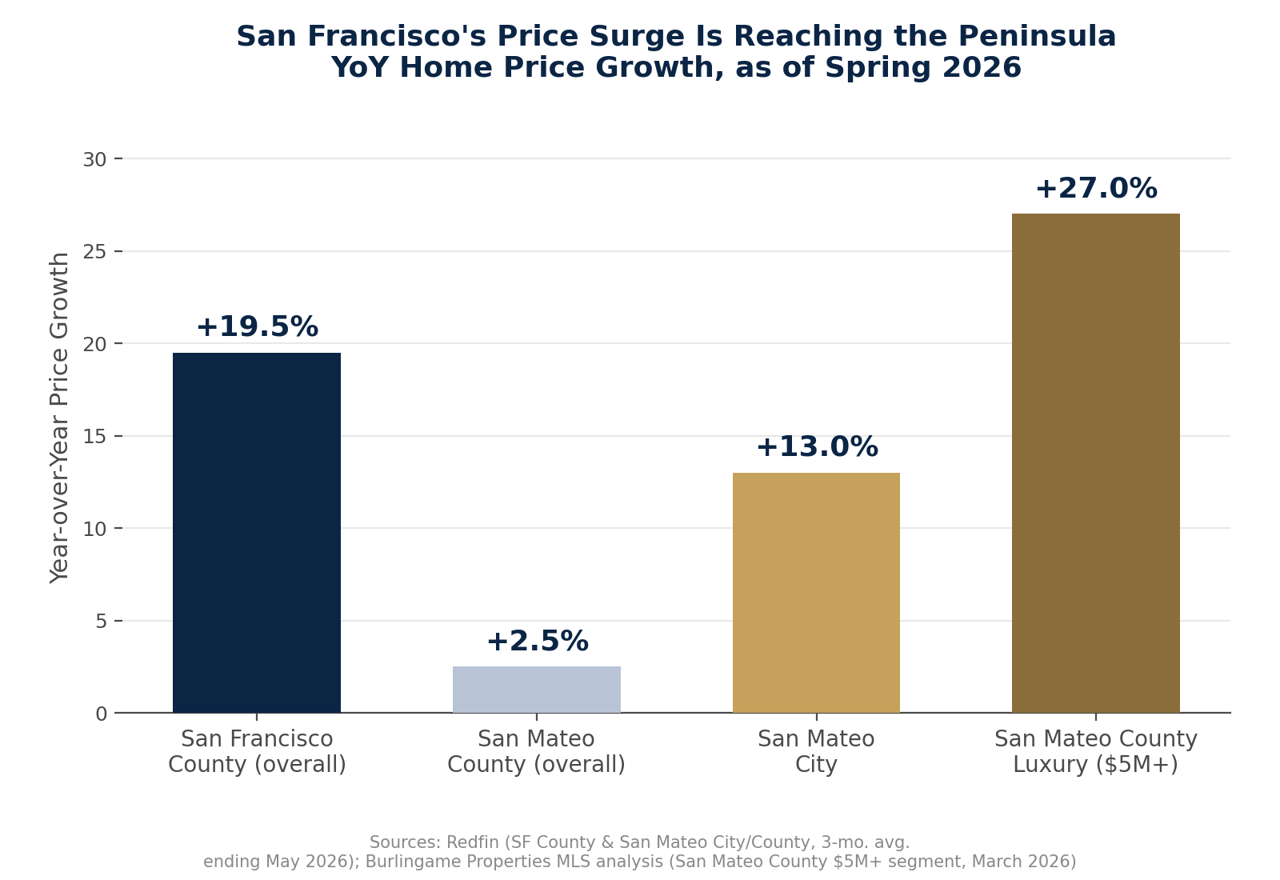
Zoom into San Francisco County specifically and the number is even sharper — a 19.5% year-over-year increase in median price as of April 2026, reaching $2,127,500. Compare that to San Mateo County's more modest 2.5% year-over-year gain over the same period, and the gap tells its own story: the AI wealth wave has hit San Francisco first, hard, and it hasn't fully spread south yet.
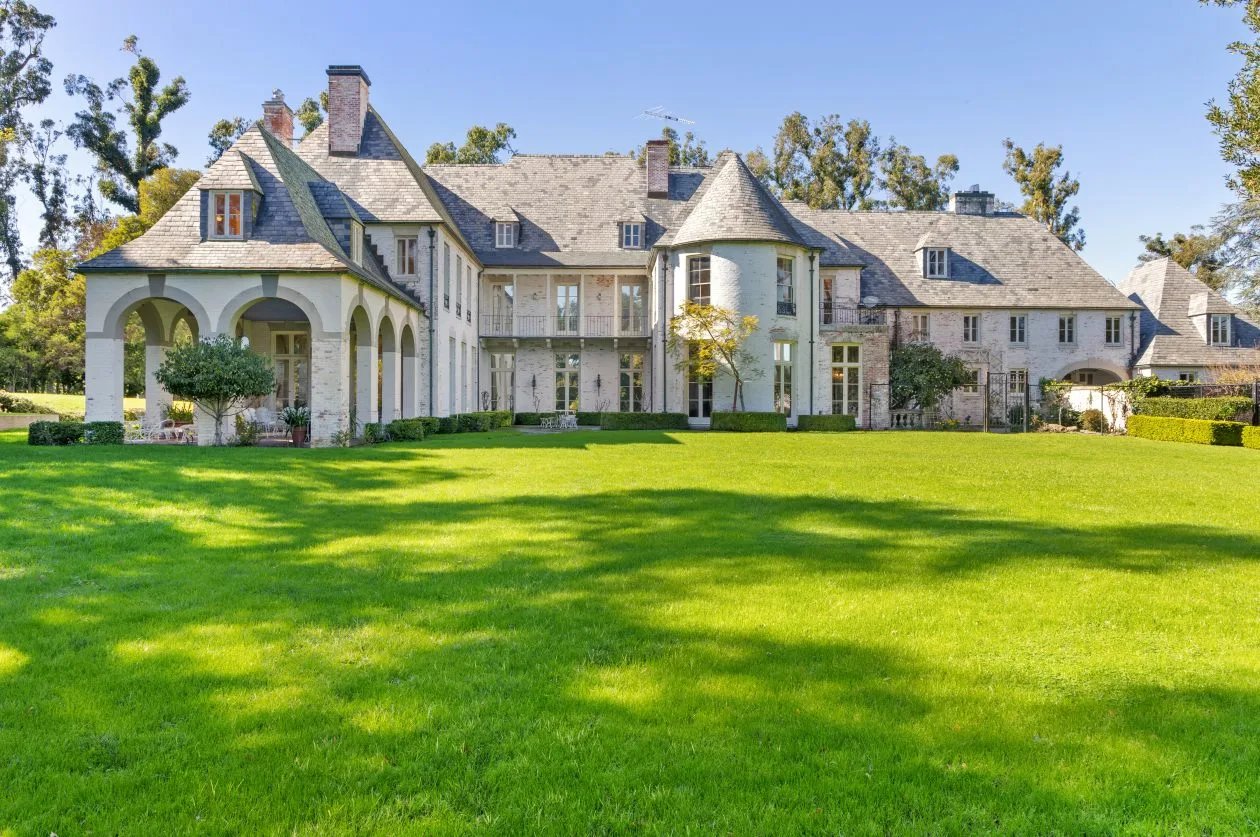
Look closer at San Mateo County, though, and the early signs of that spread are visible if you know where to look. While the overall county median is up a modest 2.5%, the city of San Mateo itself is up 13% year-over-year. And the luxury segment — homes priced at $5 million and above — saw sales jump 27% year-over-year in March 2026 alone, a pace last seen in 2022, even with mortgage rates roughly double what they were then. Luxury buyers move first because they're the ones least sensitive to financing costs and most likely to be sitting on liquidity events. That's exactly the pattern we'd expect to see at the leading edge of a wealth wave before it broadens into every price tier.
Why Buyers Are Getting Priced Out of San Francisco — And Where They're Going
San Francisco's condo and single-family markets are absorbing AI-sector wealth faster than most buyers without that kind of liquidity can compete with. Single-family rentals are already outperforming other property types nationally, with Zillow projecting 2.3% rent growth in 2026 as buyers who can't compete for a purchase stay in the rental pool longer — a dynamic that's especially pronounced in a market like San Francisco's right now.
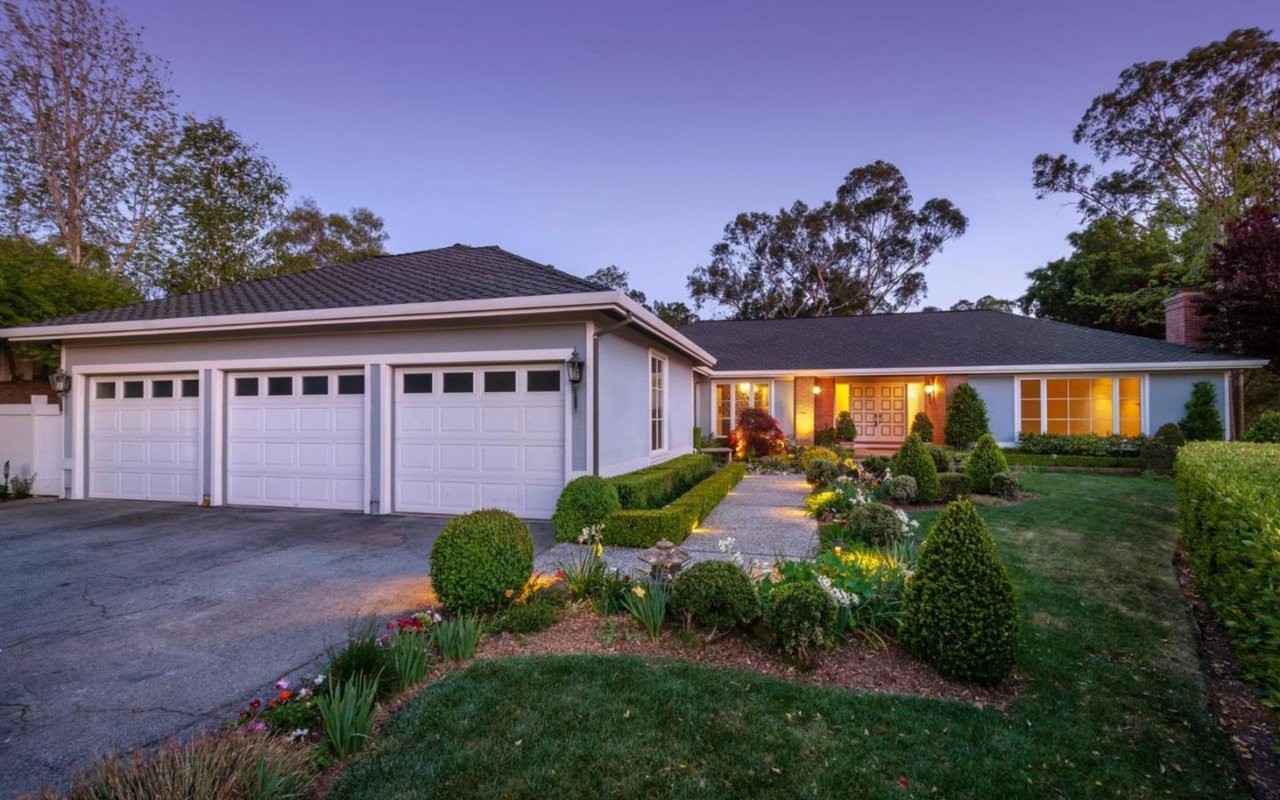
For buyers priced out of the city, or simply unwilling to compete with buyers backed by tender-offer cash, San Mateo County has always been the natural next stop: Caltrain and 101 access into the city, top school districts, and a lower — though still substantial — price point than San Francisco proper. What's different in 2026 is the inventory backdrop. San Mateo County ended 2025 with fewer than a thousand homes for sale across the entire county, and a Months of Supply Inventory reading of 1.6 as of Q1 2026 — well below the 3.0 threshold that defines a balanced market, and nowhere close to the 6.0 that would tip things toward buyers. In a market that tight, it doesn't take a large wave of new buyers to move prices. It takes two or three additional buyers per neighborhood who weren't there twelve months ago.
What Buyers Are Asking: How Much Will Homes Gain in the Next 12–18 Months?
This is the honest, complicated answer. National forecasters are cautious for 2026: the Mortgage Bankers Association projects just 0.5–0.6% growth, Zillow projects 1.2–2%, Fannie Mae projects 2.2–2.4%, and the National Association of Realtors is the most bullish major forecaster at 4%. Those numbers describe the national housing market — a market where AI liquidity isn't a factor for the vast majority of buyers.
The Peninsula and San Francisco are not that market. San Francisco's actual trailing-12-month growth is already running at 14.4–16.1%, and San Mateo County's luxury segment is already at 27%, both well ahead of every national forecast on the board. Nobody can promise those exact numbers continue at that pace for the next 18 months — markets don't move in straight lines, and rate movements, IPO timing, and broader economic conditions all matter. But the forces behind this run are specific and identifiable: two of the most valuable private companies in the world are about to convert a meaningful share of their equity into cash and public stock, held disproportionately by people who live and want to keep living in the Bay Area.
Why Now, Specifically
If you're waiting for a more "normal" market to buy in San Mateo County, it's worth being clear-eyed about what's actually ahead rather than behind. The IPOs that have only been confidentially filed so far are expected to create liquidity events larger than any tender offer that's happened to date — OpenAI's confidential filing came in June 2026, and Anthropic is reportedly targeting a listing as early as Q4 2026. Historically, the buyers who've done best in this county are the ones who positioned themselves ahead of a demand shift, not the ones who tried to time the exact bottom. Given inventory that's already this tight, waiting for prices to soften typically means waiting through the exact window when more buyers, not fewer, are entering the market.
This isn't a guarantee, and it isn't a reason to rush into a purchase that doesn't make sense for your situation. It's a reason to have a real conversation now about your price range, your timeline, and your target neighborhoods — before, rather than after, a wave of new liquidity reaches the Peninsula.
If you want to talk through what this means for your specific search, reach out to Casey Sternsmith at [email protected] or 650-678-5455.
This post reflects market data and third-party forecasts available as of the publish date and is provided for informational purposes only. It is not financial, tax, or investment advice. Real estate markets can and do fluctuate, and past performance is not a guarantee of future results.